
Picture a driver in Etobicoke with a rattling engine and no regular mechanic. They ask a neighbour, check a community Facebook group, then search Google. The shop that keeps coming up, vouched for by people they trust, is the one that gets the call.
Google behaves in much the same way. Link building is the work of earning recommendations from other websites, and each good one signals that your business deserves attention.
People talk about link building constantly, yet few explain what you actually do when you sit down to work on it. So let’s fix that. Here’s a plain English guide for local business owners, including what to do first, what to avoid, and how to tell if it’s working.
What Link Building Really Means?
A link from another website to yours is called a backlink. Search engines treat it a bit like a recommendation from a neighbour.
Link building is simply the work of earning those recommendations. And just like in real life, one good word from someone respected beats ten from strangers.
Did You Know? Google’s original PageRank system was built on this idea, treating links between pages as a kind of vote. Search has changed a lot since then, but links still help Google discover pages and judge their credibility.
Why Links Matter for Local Businesses?
Think of your website as the destination and links as the road signs pointing to it. The more good signs you have on busy roads, the more people find their way to you.
Strong links can help you:
- Climb higher for the searches your customers actually type
- Bring in referral visitors who click straight through from other sites
- Build trust, since people notice who recommends you
- Get new pages found faster by search engines
Not All Links Are Equal
One link from a respected Toronto news site can be worth more than hundreds from directories nobody visits. Before chasing any link, ask yourself:
- Is this site relevant to my industry or my area?
- Do real people read it?
- Would I still want this link if Google did not exist?
That last question is a great filter. If the link could send you real customers, you are on the right road.
Important: Links cannot rescue a weak website. If your pages are slow or confusing, visitors will leave no matter how they arrived. A website upgrade may be the smarter first stop.
How to Actually Do Link Building?
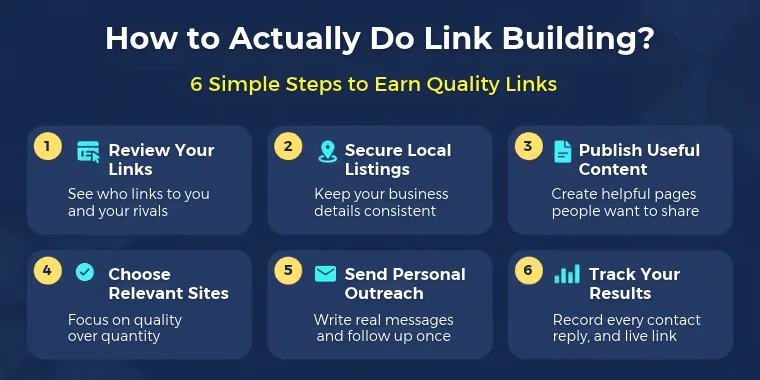
This question comes up constantly in SEO communities: forget the theory, what do you actually do? Honestly, it looks less like technical wizardry and more like old fashioned relationship building. Here is a simple process to follow.
- Check where you stand. Free tools like Google Search Console show who already links to you. Paid tools like Ahrefs or Semrush can reveal where your competitors get their links.
- Claim the easy local wins. Start with your Google Business Profile, your local chamber of commerce, and industry associations. Keep your business name, address, and phone number identical everywhere.
- Create something worth linking to. An auto shop could publish a winter tire guide for GTA drivers or a checklist for what to do after a windshield chip. Useful pages earn links far more easily than sales pages.
- Build a short list of real targets. Look for local blogs, community sites, news outlets, suppliers, and partners. Twenty relevant sites will beat two hundred random ones.
- Reach out like a human. Find the right person’s name, mention something specific about their site, and explain why your page helps their readers. Send one polite follow up, then move on.
- Keep track of everything. A simple spreadsheet works. Note the site, contact, date, reply, and live link so nothing slips through the cracks.
Quick Tip: Start with people who already know you. Suppliers, business partners, and happy clients are far more likely to say yes than a stranger, and a link from them makes perfect sense.
Local Link Ideas That Work
Need some inspiration? These ideas suit almost any local business:
- Sponsor a minor hockey team or a neighbourhood event
- Partner with complementary businesses, like a tire shop and a car detailer
- Offer expert comments to local reporters and bloggers
- Find broken links on local resource pages and suggest your page as a replacement
- Search for mentions of your business that do not link to you, then politely ask for a link
- Write a genuinely helpful guest article for a trusted industry site
The best targets depend on your field. Dental SEO leans on health and community sources, while law firm SEO often benefits from legal directories and professional associations.
Shortcuts That Lead to a Dead End
You have probably seen the emails promising 500 backlinks for $50. Keep driving. These tactics tend to cost more than they save:
- Buying links, which Google’s spam policies specifically warn against
- Joining private blog networks built only to pass ranking power
- Submitting to bulk directories that real people never use
- Blasting the same template email to thousands of sites
- Using the exact same keyword as your link text every time
Important: A quick ranking bump is not worth a long recovery. Manipulative links can be ignored by Google or even trigger a penalty, and cleaning up that mess can take months.
How to Tell If It Is Working?
Link building is a slow, steady trip, not a drag race. Most businesses should expect to wait several months before seeing meaningful movement. Along the way, keep an eye on:
- Rankings for the keywords that bring in customers
- Referral traffic from the sites linking to you
- New quality websites linking to you, not just the total link count
- Calls, form fills, and bookings, which matter most of all
Need leads while your links build momentum? Google Ads can bring in calls right away, while SEO grows in the background.
Links and AI Search
Here is a newer reason to care. People now get answers from tools like ChatGPT and Google AI Overviews, and being mentioned on trusted sites can strengthen your brand’s presence across the web.
To dig deeper, read our guides on Generative Engine Optimization and optimizing your business for Google, ChatGPT, and AI search.
When to Bring In Some Help
Doing this yourself is possible, but it takes time that most owners would rather spend serving customers. Quality outreach alone can eat up hours every week.
Professional SEO services in Toronto can handle the research, outreach, and tracking for you. Pair that with local SEO services and you have a stronger plan for showing up in both Google Maps and regular search results.
Before hiring anyone, ask where their links come from and how they report results. A good partner will happily show you, so check their client reviews too.
Ready to Put Your Rankings in the Fast Lane?
Your next customer is searching right now. Let’s make sure they find you first.
Pat’s Marketing is a Google Partner agency in downtown Toronto that has helped small and medium businesses grow since 2008. If you are looking for honest, results driven SEO services in Toronto, we would love to talk, and there are no long term contracts.
Call us today at 1.437.826.9333 or request a free strategy call.


