
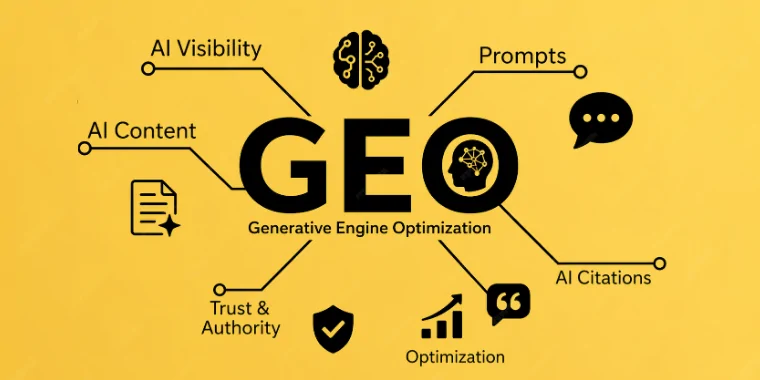
Search is evolving rapidly. Traditional SEO is no longer the only way people discover information online. With the rise of AI-powered tools like ChatGPT, Google’s AI Overviews, and other conversational assistants, users are now asking questions instead of typing keywords. This shift has given rise to a new concept: Generative Engine Optimization (GEO).
If your business depends on online visibility, understanding GEO in 2026 is no longer optional. It’s a critical part of staying competitive.
What Is Generative Engine Optimization (GEO)?
Generative Engine Optimization (GEO) is the practice of optimizing your content so that it is discovered, understood, and referenced by AI-driven search engines and generative models.
Unlike traditional SEO, which focuses on ranking web pages on search engine results pages (SERPs), GEO focuses on ensuring your content appears within AI-generated answers.
Instead of just trying to rank #1 on Google, GEO aims to ensure your brand or content is:
- Quoted or cited in AI answers
- Used as a trusted source in summaries
- Recommended in conversational search results
In simple terms, SEO helps you rank. GEO helps you get referenced.
Why GEO Matters in 2026?
1. AI Is Becoming the First Point of Search
More users are turning to AI tools before traditional search engines. Instead of browsing multiple websites, they rely on one detailed answer generated instantly.
If your content isn’t optimized for GEO, your business may never appear in those answers.
2. Zero-Click Searches Are Increasing
Even before AI, users often found answers without clicking links. Now, with generative engines, this trend is accelerating.
That means:
- Fewer clicks
- Higher competition for visibility
- Greater importance of being referenced directly in answers
3. Trust and Authority Matter More Than Ever
AI tools prioritize credible, well-structured, and authoritative content.
This means:
- Clear explanations beat keyword stuffing
- Expertise matters more than volume
- Consistency across platforms builds trust
4. Voice and Conversational Search Are Growing
With smart assistants and voice search, people naturally speak in full sentences.
GEO helps you align with:
- Natural language queries
- Conversational tone
- Intent-driven content
Key Strategies for Generative Engine Optimization
1. Create AI-Friendly Content Structure
AI systems process structured data better than prose. Use:
- Clear headers and subheadings
- Numbered lists and bullet points
- Concise paragraphs (2-3 sentences max)
- Data tables and infographics
- FAQ sections
This helps AI systems extract and cite your information more easily.
2. Answer Specific Questions Directly
AI systems are query-driven. Address the actual question someone might ask in the first sentence of your answer. Instead of:
“Search engine optimization has evolved significantly…”
Try:
“Generative Engine Optimization (GEO) is the practice of optimizing content to be featured in AI-generated responses from chatbots and AI search engines.”
3. Establish Authority and Expertise
AI systems analyze author credentials and domain expertise. Include:
- Author bios with relevant credentials
- E-E-A-T signals (Experience, Expertise, Authoritativeness, Trustworthiness)
- Industry certifications and awards
- Data from primary research
- Expert quotes and citations
4. Optimize for Natural Language and Conversational Queries
People ask AI differently than they search Google. They use complete sentences and conversational language. Write naturally, answer multi-part questions, and anticipate follow-ups.
5. Ensure Factual Accuracy and Verifiability
AI systems are trained to identify misinformation. Claims must be:
- Backed by credible sources
- Fact-checkable
- Current and updated regularly
- Transparently sourced
6. Claim Your Digital Property
Ensure your business information is accurate on:
- Google Business Profile
- Industry directories
- Knowledge panels
- Citation websites
AI systems cross-reference these properties to verify authority.
The Intersection of SEO and GEO
Here’s the good news: strong SEO is the foundation for successful GEO. Websites that perform well in traditional search are more likely to be cited by AI because they:
- Have high domain authority
- Earn quality backlinks
- Publish trusted content
- Rank for competitive keywords
The strategy isn’t to abandon SEO—it’s to enhance it with GEO considerations. Create content that’s optimized for both human readers and AI systems, structured for clarity, written with authority, and designed to answer specific questions your audience is asking.
Ready to Optimize for the Future?
If you want to improve your visibility in both search engines and AI-driven platforms, you need a strategy that combines traditional SEO with modern GEO techniques.
For expert help from a trusted SEO agency in Toronto, connect with Pat’s Marketing and start building content that performs in the future of search.
Call 437-826- 9333 to discuss your goals or get a FREE consultation today.


